Product Usage
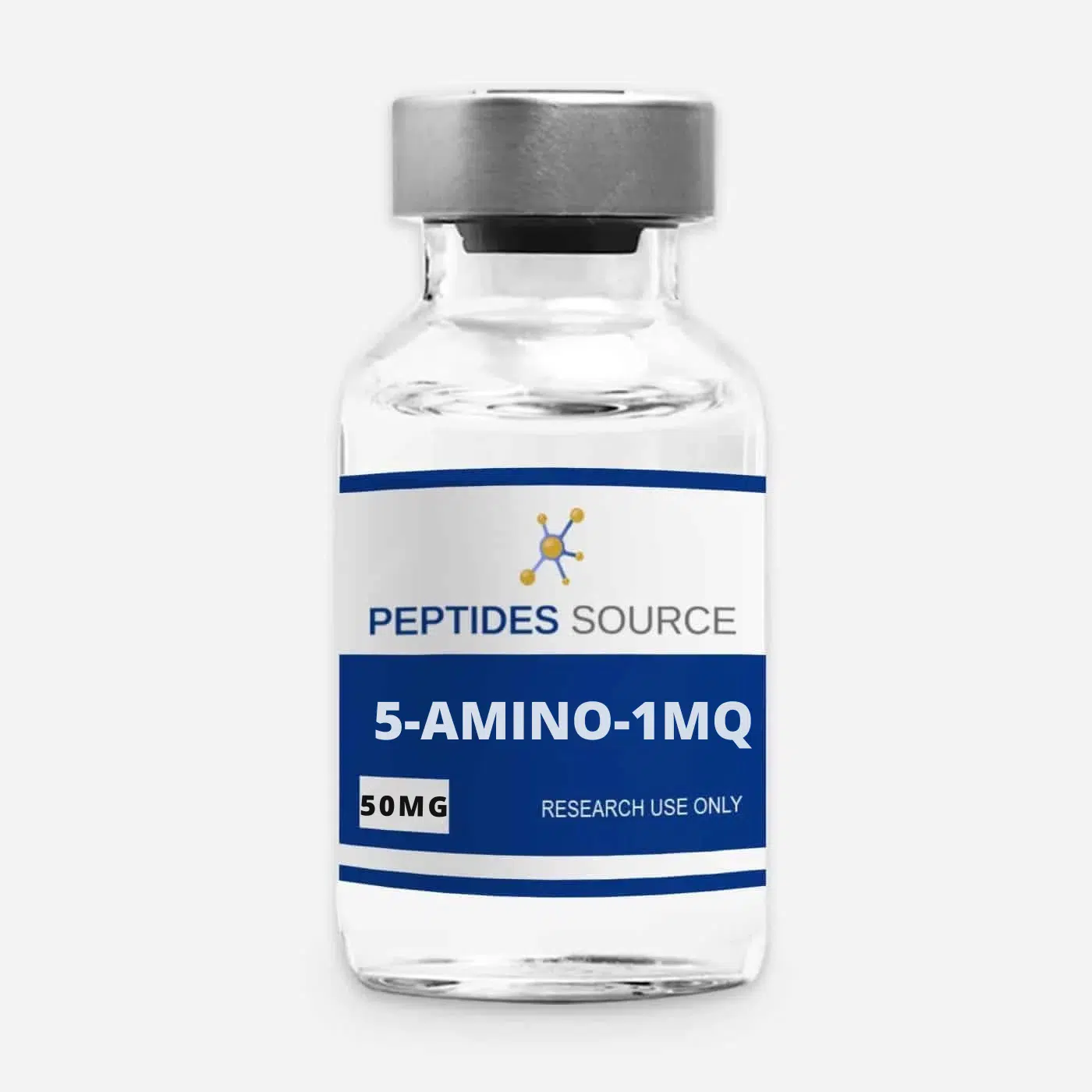
5 AMINO 1MQ 50mg IS INTENDED AS A RESEARCH CHEMICAL ONLY. This designation allows the use of research chemicals strictly for in vitro testing and laboratory experimentation only. All product information available on this website is for educational purposes only. Bodily introduction of any kind into humans or animals is strictly forbidden by law. This product should only be handled by licensed, qualified professionals. This product is not a drug, food, or cosmetic and may not be misbranded, misused or mislabled as a drug, food or cosmetic.
5-Amino-1-methylquinolinium (5-Amino-1MQ) is a small molecule derivative of 1-methylquinolinium that selectively inhibits nicotinamide N-methyltransferase (NNMT), an enzyme involved in metabolic regulation and epigenetic control. By suppressing NNMT activity, 5-Amino-1MQ has shown potential in enhancing energy metabolism, reducing fat accumulation, and modulating cellular function in various preclinical models.
Introduction
5-Amino-1-methylquinolinium (5-Amino-1MQ) is an emerging compound of interest in metabolic and aging-related research due to its role as an inhibitor of the enzyme nicotinamide N-methyltransferase (NNMT). NNMT plays a crucial part in cellular metabolism and is upregulated in various metabolic disorders, including obesity, type 2 diabetes, and certain cancers. Elevated NNMT activity has been associated with decreased NAD+ availability and disrupted methylation balance, both of which are key factors in cellular aging and metabolic decline. By inhibiting NNMT, 5-Amino-1MQ can help restore NAD+ levels and methyl donor availability, thereby promoting more efficient cellular function and potentially reversing some age- or disease-related metabolic dysfunctions. Research into 5-Amino-1MQ is still in its early stages, but preliminary studies in cell cultures and animal models have shown promising outcomes, including reduced adiposity, enhanced mitochondrial activity, and improved insulin sensitivity. Its potential benefits extend to muscle performance, fat metabolism, and longevity support. With its mechanism centered on rebalancing cellular bioenergetics and gene expression pathways, 5-Amino-1MQ offers a novel therapeutic angle for a wide range of metabolic and age-related conditions. This makes it a compelling subject for continued biomedical investigation and therapeutic development.
Overview
5-Amino-1-methylquinolinium (5-Amino-1MQ) is attracting significant interest for its biological effects that stem from its targeted inhibition of nicotinamide N-methyltransferase (NNMT). NNMT is an enzyme that catalyzes the methylation of nicotinamide using S-adenosylmethionine (SAM) as a methyl donor. This process generates 1-methylnicotinamide (1-MNA), reducing both nicotinamide (a precursor of NAD+) and SAM (a crucial methyl donor), leading to downstream consequences on cellular metabolism and epigenetic regulation. In many chronic metabolic diseases and cancers, NNMT is overexpressed, which contributes to pathological alterations in cellular energy balance and methylation patterns. 5-Amino-1MQ, by inhibiting NNMT, has a dual effect on metabolism. First, it helps preserve intracellular nicotinamide levels, thereby supporting NAD+ biosynthesis. NAD+ is essential for the function of sirtuins and other metabolic enzymes involved in mitochondrial health and oxidative metabolism. Second, it conserves methyl groups by reducing the consumption of SAM, which has implications for DNA and histone methylation, key mechanisms in gene expression regulation. Through these biochemical actions, 5-Amino-1MQ can influence both energy metabolism and epigenetic stability. Preclinical studies involving 5-Amino-1MQ have yielded several promising results. In mouse models, administration of the compound has led to significant reductions in white adipose tissue without causing muscle loss. This suggests a preferential targeting of fat metabolism rather than general catabolism. Enhanced mitochondrial function has also been observed, correlating with increased expression of genes involved in oxidative phosphorylation and thermogenesis. Furthermore, treated animals exhibited improved glucose handling and insulin sensitivity, highlighting its therapeutic potential in metabolic syndrome and type 2 diabetes. Beyond its metabolic effects, the epigenetic modulation driven by 5-Amino-1MQ is a subject of growing interest. By maintaining SAM pools and limiting aberrant methylation, the compound may stabilize the expression of genes that protect against inflammation, oxidative stress, and cellular senescence. This positions 5-Amino-1MQ not only as a metabolic modulator but also as a candidate for age-related disease intervention. There is also emerging interest in its potential neuroprotective effects, as NNMT activity is implicated in neurodegenerative disorders like Parkinson’s disease. Pharmacologically, 5-Amino-1MQ is characterized by its small size and favorable cell permeability, making it a suitable candidate for oral or injectable formulations. However, data on its pharmacokinetics, toxicity profile, and long-term effects in humans are still lacking. Early-phase research continues to focus on mechanism elucidation and efficacy validation in animal models. Overall, 5-Amino-1MQ represents a novel class of NNMT inhibitors with the potential to impact multiple physiological pathways. Its action at the intersection of metabolism and epigenetics provides a unique approach to treating complex diseases driven by energy imbalance and gene dysregulation. As research advances, the compound could find utility in therapeutic strategies aimed at obesity, diabetes, aging, and related chronic conditions.
Mechanism of action
It works primarily by inhibiting the enzyme nicotinamide N-methyltransferase (NNMT), which plays a central role in both energy metabolism and epigenetic regulation. Here’s how it exerts its effects at the molecular level:
1. Inhibition of NNMT Activity
NNMT catalyzes the methylation of nicotinamide (NAM) using S-adenosylmethionine (SAM) as the methyl donor, producing 1-methylnicotinamide (1-MNA) and S-adenosylhomocysteine (SAH). This reaction consumes both NAM and SAM, depleting precursors that are critical for two essential pathways:
- NAD+ biosynthesis (from NAM)
- Methylation reactions (dependent on SAM)
By inhibiting NNMT, 5-Amino-1MQ:
- Reduces the conversion of NAM into 1-MNA
- Preserves NAM for NAD+ biosynthesis
- Prevents excessive SAM depletion, stabilizing methyl group availability for epigenetic and metabolic functions
2. Restoration of NAD+ Levels
Nicotinamide is a vital precursor for NAD+ (nicotinamide adenine dinucleotide), a coenzyme required by several cellular enzymes, especially sirtuins, PARPs, and CD38. These enzymes regulate:
- Mitochondrial function
- DNA repair
- Oxidative stress response
- Inflammatory signaling
By conserving nicotinamide, 5-Amino-1MQ indirectly increases NAD+ levels, which enhances:
- Mitochondrial biogenesis
- Fat oxidation
- Cellular energy production
3. Preservation of Methyl Donors
The SAM-to-SAH ratio is critical for DNA and histone methylation. When NNMT is overactive, SAM is excessively consumed, leading to a reduced methylation capacity and epigenetic instability. 5-Amino-1MQ helps maintain:
- SAM levels, ensuring normal methylation patterns
- Epigenetic balance, supporting healthy gene expression
This contributes to:
- Reduced inflammation
- Controlled cell proliferation
- Protection against age-related gene dysregulation
4. Downregulation of NNMT-Driven Pathologies
NNMT overexpression is associated with:
- Obesity (by stabilizing fat storage gene expression)
- Insulin resistance
- Cancer (via epigenetic silencing of tumor suppressor genes)
By inhibiting NNMT, 5-Amino-1MQ counteracts these pathological effects, promoting:
- Fat loss
- Improved insulin sensitivity
- Anti-tumor and anti-aging effects (in preclinical models)


Reviews
There are no reviews yet.